
Key Takeaways:
- A typical wedding ceremony order is Processional, Welcome, Readings, Vows, Rings, Pronouncement, Kiss, Recessional, so you always know what comes next.
- Most non-religious ceremonies last about 20 minutes, while short elopements are closer to 15 minutes, and full religious services can take 45 to 60 minutes.
- Readings, unity rituals, and license signing usually sit in the middle of the ceremony around the vows and rings, so you can add meaning without breaking the flow.
We were setting up a micro-wedding in a park last summer. The arch was up, the pillows were laid out, and the guests had arrived. Then, everyone just stood there. The officiant looked at the couple. The couple looked at the DJ, and the DJ looked at us.
Nobody knew who was supposed to start walking.
Those awkward thirty seconds of silence stuck with us. It happens more often than you’d think. Couples spend months choosing flowers and playlists, but often forget to map out the actual flow.
Who walks when? When do you sign the paper? How long does the whole thing actually take?
This guide covers the logistics built for couples who want a smooth run of show. Below you will find the standard wedding ceremony order of events, plus the legal basics you cannot skip.
Quick Links
- Wedding Ceremony Outline: Quick List
- Wedding Ceremony Order of Events Timeline
- Wedding Ceremony Program
- Order of Wedding Ceremony
- Wedding Order of Service: Civil and City Hall
- Wedding Ceremony Structure: Jewish
- Wedding Ceremony Format: Hindu
- Typical Wedding Ceremony Order: Catholic
- Wedding Order: Steps
- Music Cues and Song Count
- Unity Rituals + Mini Scripts
- Steps of a Wedding Ceremony: Checklist + Tips
- Wedding Ceremony Outline
- Plan Your Wedding Ceremony
- FAQ
Wedding Ceremony Outline: Quick List💍
If you just need the answers fast, here is the standard flow. This works for about 90% of the Western-style weddings we see, from backyard to ballroom. It hits the emotional highs without dragging on.
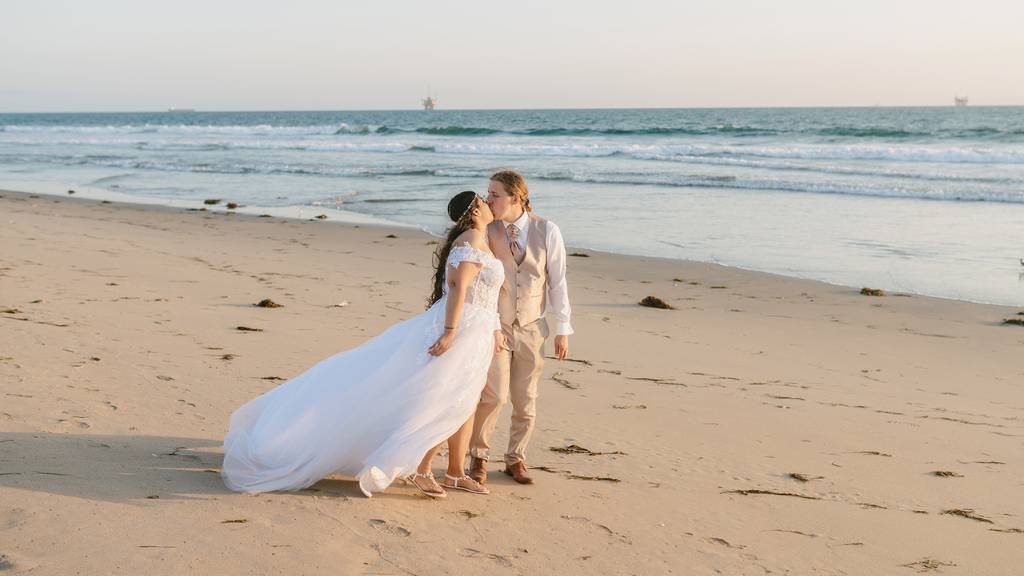
Copyright ©️ Photo by Picnic Makers
Standard 10-Step Order:
- Prelude Music. Ambient tracks play while guests find seats.
- Processional. The entry. Family first, wedding party next, then the couple.
- Welcome. The officiant says hello and sets the tone.
- Readings. A friend or family member shares a poem, scripture, or excerpt.
- Officiant Address. The “story” part of the ceremony.
- Exchange of Vows. You make your promises.
- Ring Exchange. You seal those promises.
- Pronouncement. The “I now pronounce you” moment.
- The Kiss. The signal that the deal is done.
- Recessional. You walk back up the aisle to upbeat music.
Pro Tip:
- If you feel unsure about your ceremony order, read it out loud with your officiant once. If it sounds smooth when spoken, it will feel smooth on the day.
Where do the extras fit?
If you have a unity ritual (candles, sand, wine), it usually happens right after the vows and rings, before the final pronouncement. If you are signing the marriage license publicly, do it during the unity ritual time or right after the kiss.
Also, look for wedding quotes for vows and readings early. Finding the right words takes longer than you expect.
Wedding Ceremony Order of Events Timeline 💍
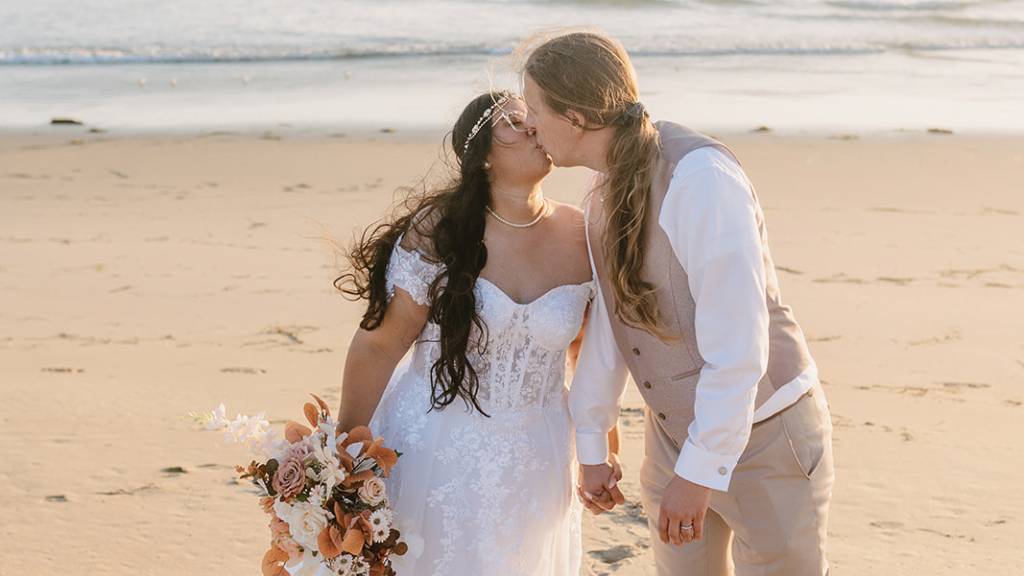
Pacing is everything. A ceremony that feels “too long” is usually just a ceremony with too much dead air between steps. We sketched out three timeline options based on real setups we’ve timed.
Copyright ©️ Photo by Picnic Makers
The “Short & Sweet” (15 Minutes)
- 0-5 min: Processional and Welcome.
- 5-10 min: Vows and Rings.
- 10-15 min: Pronouncement, Kiss, Recessional.
Best for: Elopements, hot outdoor days, and standing ceremonies.
The “Standard” (20 Minutes)
- 0-5 min: Processional and Welcome.
- 5-10 min: One Reading and Officiant Address.
- 10-15 min: Vows and Rings.
- 15-20 min: Pronouncement, Kiss, Recessional.
Best for: Most non-religious weddings.
The “Full Experience” (30 Minutes)
- 0-5 min: Processional.
- 5-10 min: Welcome and Introduction.
- 10-15 min: Two Readings (or one reading + musical interlude).
- 15-25 min: Expanded Vows, Unity Ritual, Rings.
- 25-30 min: Closing Remarks, Kiss, Recessional.
Pro Tip:
- Guests start to lose focus after about 25 minutes. If you want extra readings or music, trim your welcome or officiant’s address to keep the ceremony feeling light.
Best for: Couples who wrote long personal vows or want a slower pace.
Field Note: If you are outdoors, wind is a factor. Your voice won’t carry as well as it does indoors. We always recommend a solid ceremony sound system so your guests aren’t straining to hear your 20-minute program.
Wedding Ceremony Program ⏱️
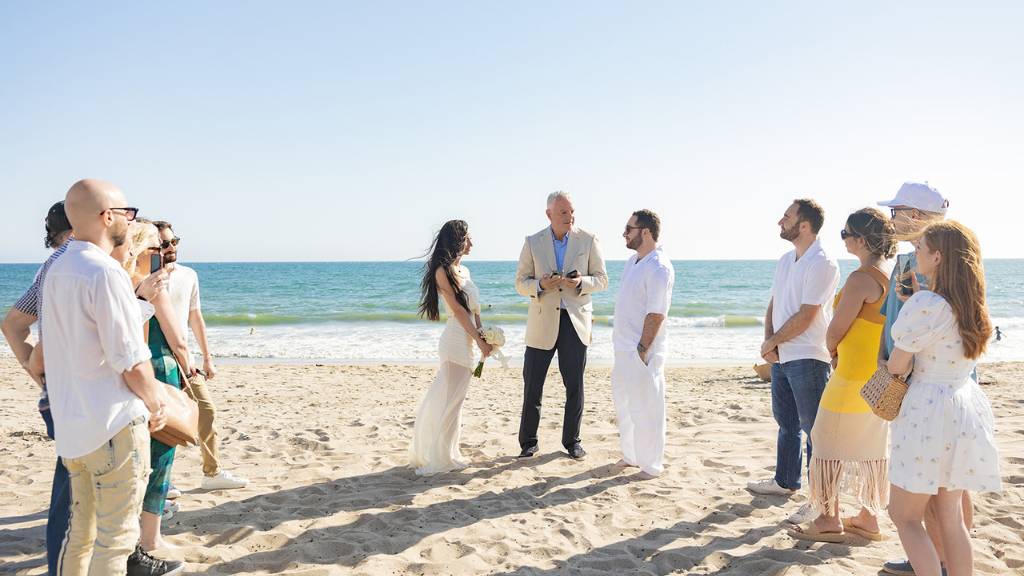
You don’t need to print every word the officiant says. The goal of a wedding ceremony program is to help guests follow along and feel included. It’s also the best place to explain cultural traditions they might not know.
Copyright © Photo by Picnic Makers
What to Include:
- The Schedule: Just the main headers (Processional, Readings, Vows, Recessional).
- The Players: Parents, wedding party, and officiant names.
- The Readings: Title and author. Maybe the text is short.
- Housekeeping: “Unplugged ceremony” notes or “Please stay seated.”
Pro Tip:
- If your ceremony includes cultural or religious elements that some guests may not know, add one simple sentence under each tradition in the program so everyone understands what is happening.
Where to Place Things:
Keep it chronological. If you are doing a “Ring Warming” (passing the rings around for guests to bless), put a note in the program explaining what to do when the rings arrive at their row.
We often place programs on chairs or a welcome table. If you have a ceremony photo backdrop stand near the entrance, that is a prime spot for a basket of programs.
Order of Wedding Ceremony 💍
Traditional Flow 🕊️
This is the blueprint most guests expect. It feels familiar. It has a beginning, a middle, and an end. When we talk about the order of wedding ceremony events for a standard Western wedding, this is the script.
The Flow:
- Welcome: “We are gathered here today…”
- Declaration of Intent: “Do you take this person?” (The “I dos”).
- Vows: The personal promises.
- Exchange of Rings: “With this ring, I thee wed.”
- Pronouncement: “By the power vested in me…”
- The Kiss.
- Presentation: “May I present to you for the first time…”
Officiant Tip:
Keep the welcome warm but brief. A simple “On behalf of [Name] and [Name], thank you for being here” works wonders.
Visuals matter here. Framing the couple with one of our favorite wedding ceremony arch backdrops gives the guests a focal point during the longer spoken sections.
Nondenominational 📋
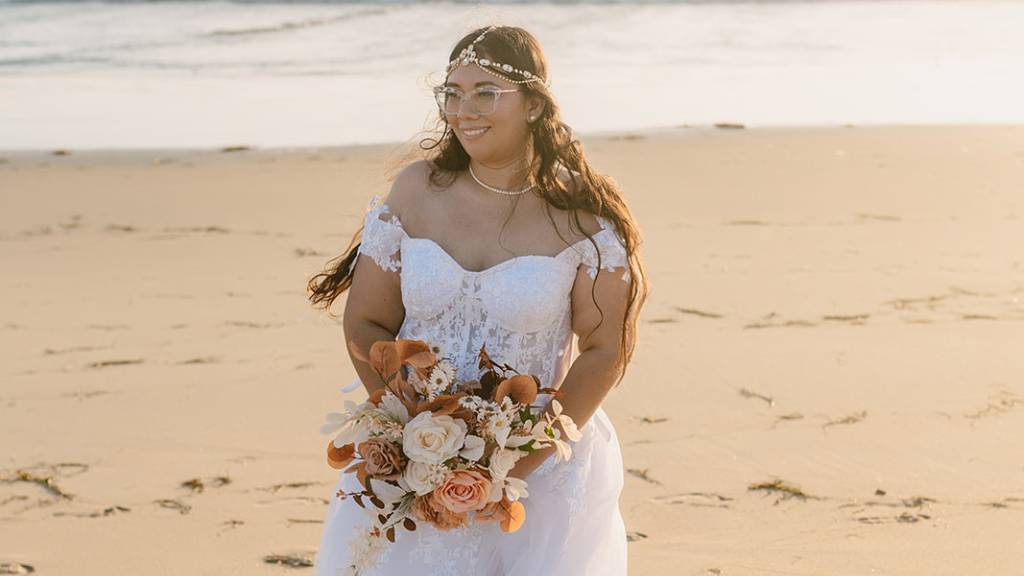
Modern ceremonies often ditch the “giving away” language and the sermons. A nondenominational wedding ceremony outline focuses on the couple’s story rather than religious instruction.
Copyright © Photo by Picnic Makers
Key Differences:
- Processional: Often, the couple walks in together or meets halfway. There are no rules on who escorts whom.
- Address: The officiant tells the story of how the couple met instead of reading scripture.
- Unity Rituals: This is where you see wine blending, tree planting, or handfasting.
Accessibility Note:
Check your aisle width. If you are using boho ceremony décor ideas like rugs or lanterns, make sure there is still enough clearance for grandparents or anyone with mobility aids to get to their seats safely.
Wedding Order of Service: Civil and City Hall ❤️
Sometimes you just want it legal. A civil wedding order of service is efficient. It strips away the pomp and focuses on the contract.
The Civil Script:
- Presentation of License: You hand the paperwork to the official.
- Short Welcome: One or two sentences.
- Legal Vows: The state-required statements to declare you are free to marry.
- Ring Exchange: Optional, but usually included.
- Pronouncement.
- Signing.
Witnesses:
Check your local laws. Some city halls require a witness to stand right next to you; others don’t. If you are planning micro wedding ceremony ideas, make sure you have at least one person designated to sign the dotted line if the state demands it.
Wedding Ceremony Structure: Jewish 🤍
Jewish traditions are rich with symbolism. The wedding ceremony structure typically takes place under a Chuppah, representing the home the couple will build.
The Basic Flow:
- Bedeken: The veiling ceremony (often happens before the main event).
- Processional: Parents often escort both partners.
- Circling: The bride (or couple) circles the groom (or each other) seven times.
- Kiddushin: The betrothal blessings over wine.
- Ring Exchange: Traditionally, the groom places a ring on the bride’s index finger.
- Sheva Brachot: The Seven Blessings.
- Breaking the Glass: A reminder of the destruction of the Temple (and a cue to shout “Mazel Tov!”).
According to Encyclopaedia Britannica, the breaking of the glass is one of the most widely recognized features, symbolizing the fragility of happiness. It marks the definitive end of the ceremony.
Wedding Ceremony Format: Hindu ❤️
A Hindu wedding ceremony format is a vibrant, multi-sensory experience. It is not a 20-minute affair. It can last hours, so pacing and guest comfort are key.
Key Elements:
- Baraat: The groom’s festive arrival procession.
- Milni: Meeting of the families.
- Kanyadaan: The giving away of the daughter.
- Agni Poojan: The sacred fire is lit.
- Saptapadi: The Seven Steps taken together around the fire. This is the legal part of the marriage in many traditions.
- Mangalsutra: The groom ties a sacred necklace on the bride.
Timing Tip:
Since the ceremony is long, many couples provide refreshments or printed guides explaining the steps so guests understand the significance of the wedding ceremony program.
Typical Wedding Ceremony Order: Catholic 💐
If you are marrying in the Catholic Church, the liturgy dictates the flow. You have two main options: a ceremony with Mass or without Mass.
Copyright © Photo by Picnic Makers
Typical Wedding Order (With Mass):
- Entrance Rites: Procession and Opening Prayer.
- Liturgy of the Word: Old Testament, Psalm, New Testament, Gospel, Homily.
- Rite of Marriage: Questions of Intent, Consent (Vows), Blessing of Rings.
- Liturgy of the Eucharist: Preparation of Gifts, Eucharistic Prayer, Communion.
- Concluding Rites: Final Blessing and Recessional.
If you skip the Mass, you jump from the Rite of Marriage straight to the Lord’s Prayer and Concluding Rites. This saves about 20-30 minutes.
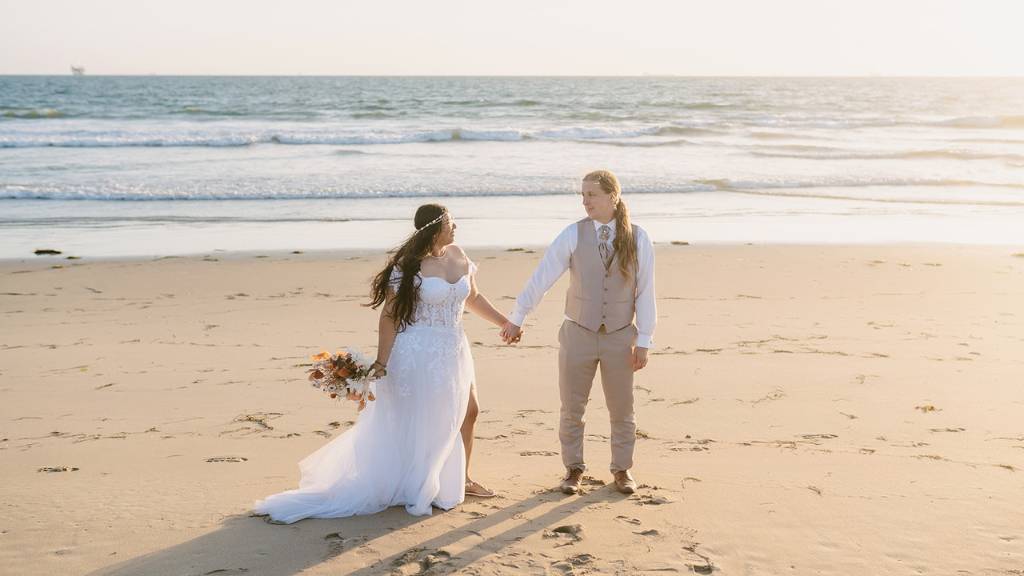
Wedding Order: Steps 👰🏻🤵🏻
This is the “herding cats” portion of the day. Getting the wedding order of walking right requires practice.
The Processional (Entrance):
- Officiant: Goes first or stands at the altar.
- Grandparents: Seated first in the front row.
- Parents: Often, the Mother of the Bride is the last parent seated, signaling the start.
- Groom: Can walk with parents or enter from the side.
- Wedding Party: Best Man/Maid of Honor can walk alone or in pairs.
- Flower Girl/Ring Bearer.
- The Partner(s): The big entrance.
Copyright © Photo by Picnic Makers
The Recessional (Exit):
Reverse it. Couple first. The wedding party. Then parents. Then guests.
Pro Tip:
- Tell the wedding party to wait until the couple is all the way out of the room before they start walking. It prevents a traffic jam in the aisle. For more logistics, check out our rehearsal dinner ideas to prep your crew the night before.
Music Cues and Song Count 🤍
You don’t need a 20-song playlist. You really only need three or four key tracks to make the wedding ceremony order of events feel polished.
The Essential Playlist:
- Prelude: 3-5 songs. Low energy, instrumental. Sets the vibe.
- Processional 1 (Family/Party): 1 song. Something with a clear rhythm to walk to.
- Processional 2 (Entrance): 1 song. The “moment.” Make it loud.
- Recessional: 1 song. High energy, celebratory. Start it exactly when the kiss breaks.
Lighting sets the mood as much as music. If the sun is setting, string lights for ceremonies can act as a visual cue that the party is transitioning to evening.
Unity Rituals + Mini Scripts 🕊️
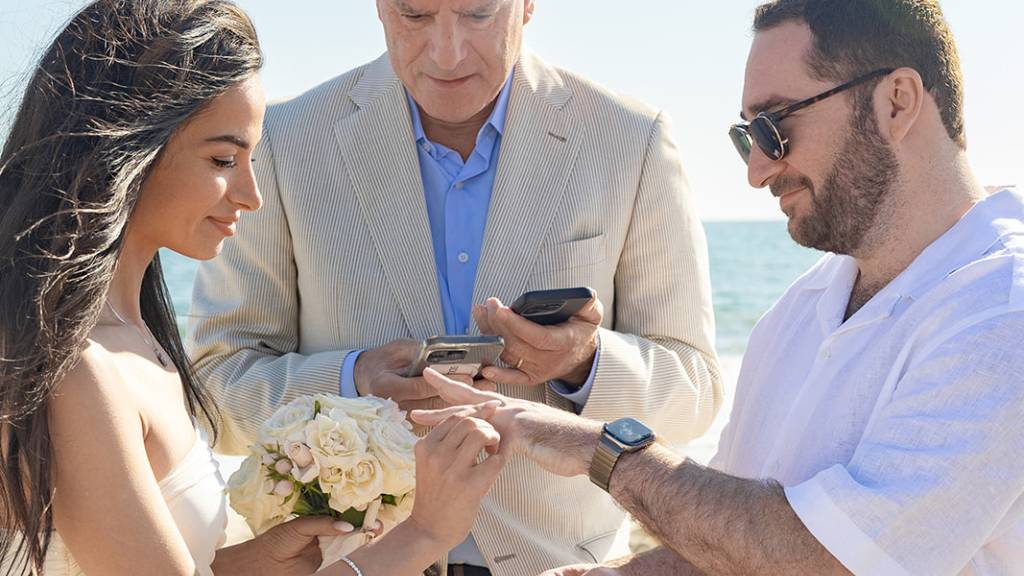
Unity rituals add a physical action to the spoken promises. They are great for nerves—it gives you something to do with your hands.
Copyright © Photo by Picnic Makers
Popular Ideas:
- Unity Candle: You each light a taper, then light a center pillar together.
Script: “May the brightness of this one light shine from your lives.”
- Sand Ceremony: Pouring two colors of sand into one vessel.
Script: “Just as these grains of sand can never be separated, neither can your lives.”
- Handfasting: Tying cords around joined hands.
Script: “These are the hands that will build your future.”
We’ve used beautiful unity candle holders that double as reception décor. If you buy something nice for the ritual, you might as well reuse it on the head table.
Pro Tip:
- Tell your photographer where the unity ritual will happen and how long it takes. These moments are often quiet and beautiful, and clear timing means they will not miss the shot.
Steps of a Wedding Ceremony: Checklist + Tips 🤵🏻
A beautiful ceremony means nothing if it isn’t legal. We have seen near-misses with licenses left in hotel rooms.
The Legal Checklist:
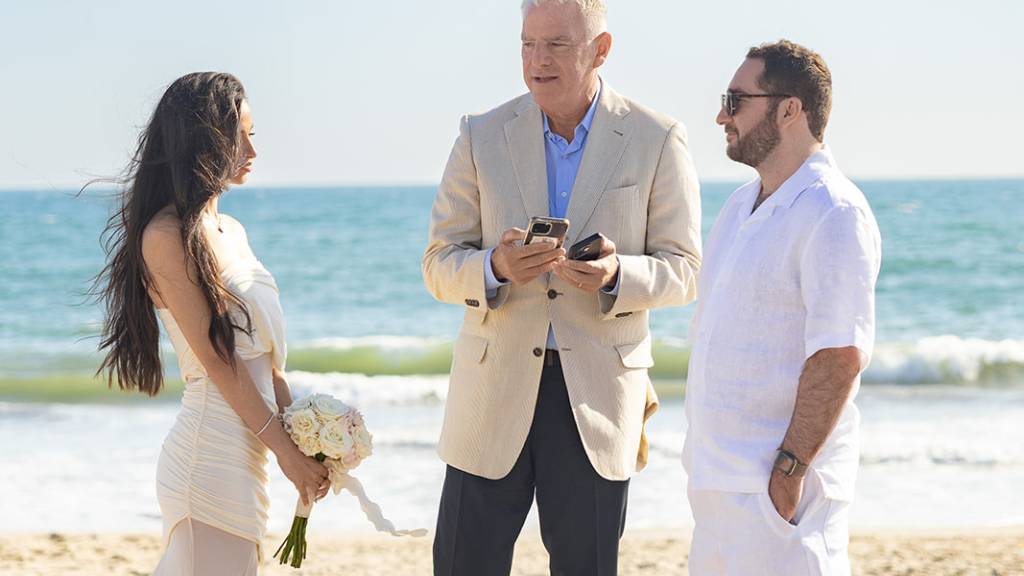
- The License: Bring it. Give it to the officiant before the ceremony starts.
- The ID: Verify the officiant has checked your IDs if required by the county.
- The Words: In many places, the “Declaration of Intent” (the public “I do” or “I will”) is legally required.
- The Pronouncement: The officiant must declare you married.
Copyright © Photo by Picnic Makers
Officiant Note:
- If a friend is marrying you, remind them to tell the guests to sit down after the entrance. We’ve seen guests stand for 15 minutes because the nervous friend forgot to wave them down. FindLaw notes that while requirements vary by state, the physical presence of the couple and officiant is the universal constant.
Wedding Ceremony Outline 💍
The wedding ceremony outline isn’t just for you; it’s for the team. Your vendors need to know what happens when.
The Vendor Call Sheet:
- Photographer: Needs to know the “Kiss” cue so they are in position.
- DJ/Musician: Needs to know the “step off” cue to fade the music.
- Coordinator: Needs to know when to queue the parents.
Copyright © Photo by Picnic Makers
Staging Check: Check the sun. If you are outdoors at 4 PM, one of you might be staring directly into the sun. Adjust the arch angle slightly. Also, if you plan to show a slideshow or video tribute, a projector for ceremony visuals needs to be tested for brightness before guests arrive.
Plan Your Wedding Ceremony 💐
That park wedding we mentioned earlier? We eventually got them down the aisle. But we learned that a little structure goes a long way.
At Picnic Makers, we handle the logistics of the setup so you can focus on the wedding ceremony order of events. From the arch placement to the aisle width and the timing of the sunset, we create environments that flow naturally. Whether it’s a beach elopement or a backyard micro-wedding, we set the stage.
Check out our beach wedding ceremony ideas to see how we manage wind, sand, and timing.
FAQ
What is the correct order of a wedding ceremony?
The classic order is: Processional, Welcome, Readings, Vows, Rings, Pronouncement, Kiss, Recessional. This covers the legal and emotional bases efficiently.
How long is a typical ceremony?
Aim for 20 minutes. This gives you enough time for meaningful readings and vows without guests getting restless. Religious services (like a Catholic Mass) will run 45-60 minutes.
Where do readings fit?
They work best right after the Welcome and before the Vows. They serve as a bridge between the casual “hello” and the serious promises.
Who walks down the aisle first?
Traditionally, the officiant, followed by grandparents, then parents. The groom can enter with his parents or wait at the front. The wedding party follows, and the partner(s) enter last.
Do you sign the license before or after?
Usually after. Most couples sign it immediately following the Recessional in a private moment, but some include it in the ceremony as a “signing ritual.”
How do we start the recessional music?
The cue is the kiss. The moment your lips separate, the music should hit. It signals that the celebration has started. For more details on wording your invites to match this flow, check out our guide on rehearsal dinner invitation wording.